The field of child to parent violence and abuse is a rapidly changing one, as new learning and understanding emerges to challenge our way of thinking and service delivery. This makes it an exciting field in which to be working – but also requires us to be on the ball with new research and training opportunities. This last year has seen important work from Dr Hannah Bows into parricide and eldercide; and more findings from a survey of parents by Dr Wendy Thorley and Al Coates, including a challenge to the definition currently in use. Have we got it wrong when we draw distinctions between children, young people and adults in the use of violence towards parents? Should we be using different approaches where children have a diagnosis of ASD or ADHD? Is this a different thing all together, or are there huge overlaps within the community of young people using violence and abuse in the home? Should we be representing this with a giant Venn diagram? Continue reading
Filial violence across the life course
It was great to see a new international network, aiming to connect academic research on all forms of violence against parents, launched last week by Dr Kate Fitz-Gibbon in Australia. The International Network Addressing Filial Violence “will underpin ground-breaking, systematic and collaborative research into all forms of child to parent violence: childhood violence against parents, adolescent family violence, parricide at all ages, and elder abuse.” Members include Dr Kate Fitz-Gibbon, Associate Professor Rachel Condry, Professor JaneMaree Maher, Dr Caroline Miles, Professor Heather Douglas, Professor Kathleen Heide, Dr Eldra Solomon, Dr Wendy O’Brien, Associate Professor Esther Calvete and Dr Karla Elliott.
This remains a little researched subject, with new understanding constantly emerging, and so this collaborative direction of travel is very exciting.
You will find more information about each member, and about their publications, on the Monash University website.
Filed under Announcements, Research
Reports from the 2018 CPVA Survey
You may have been following the discussion opened up by Dr Wendy Thorley and Al Coates, following their survey of adoptive and foster families at the end of 2016 (here, here, here and here), and then the enlarged questionnaire to all families experiencing violence and aggression from their children of 2018. If so, you will already be aware of the way in which the responses brought to the fore a number of difficulties with the way in which CPVA is understood and conceptualised; particularly around intent, and children who have either a recognised mental health diagnosis, learning difficulty, or have experienced trauma in early childhood. Two documents are now available, comprising a full and detailed analysis of the recent survey responses, and an extended summary of the main discussion points and recommendations. The first is available through Amazon, the second as a free download from Academia. Continue reading
Filed under Book review
Adolescent Family Violence Research in Australia, report launch
The Adolescent Family Violence Research team from Monash University are due to launch their research report in August, in Melbourne, Australia.
This Report presents the findings of a qualitative study examining adolescent family violence in Victoria. The study involved two phases – a survey with 120 persons experiencing adolescent family violence as well as focus groups and in-depth interviews with 45 experts, service providers, General Practitioners and health service providers.
Our findings explore gender, age and types of adolescent family violence; impacts and experiences of adolescent family violence, social structures and responses, the role of the criminal justice system and recommended future work in this area. While primarily Victorian focused, the findings are of relevance to all Australian jurisdictions and comparative countries. Continue reading
Filed under Announcements, Research
Who’s in Charge? A much awaited book from Eddie Gallagher
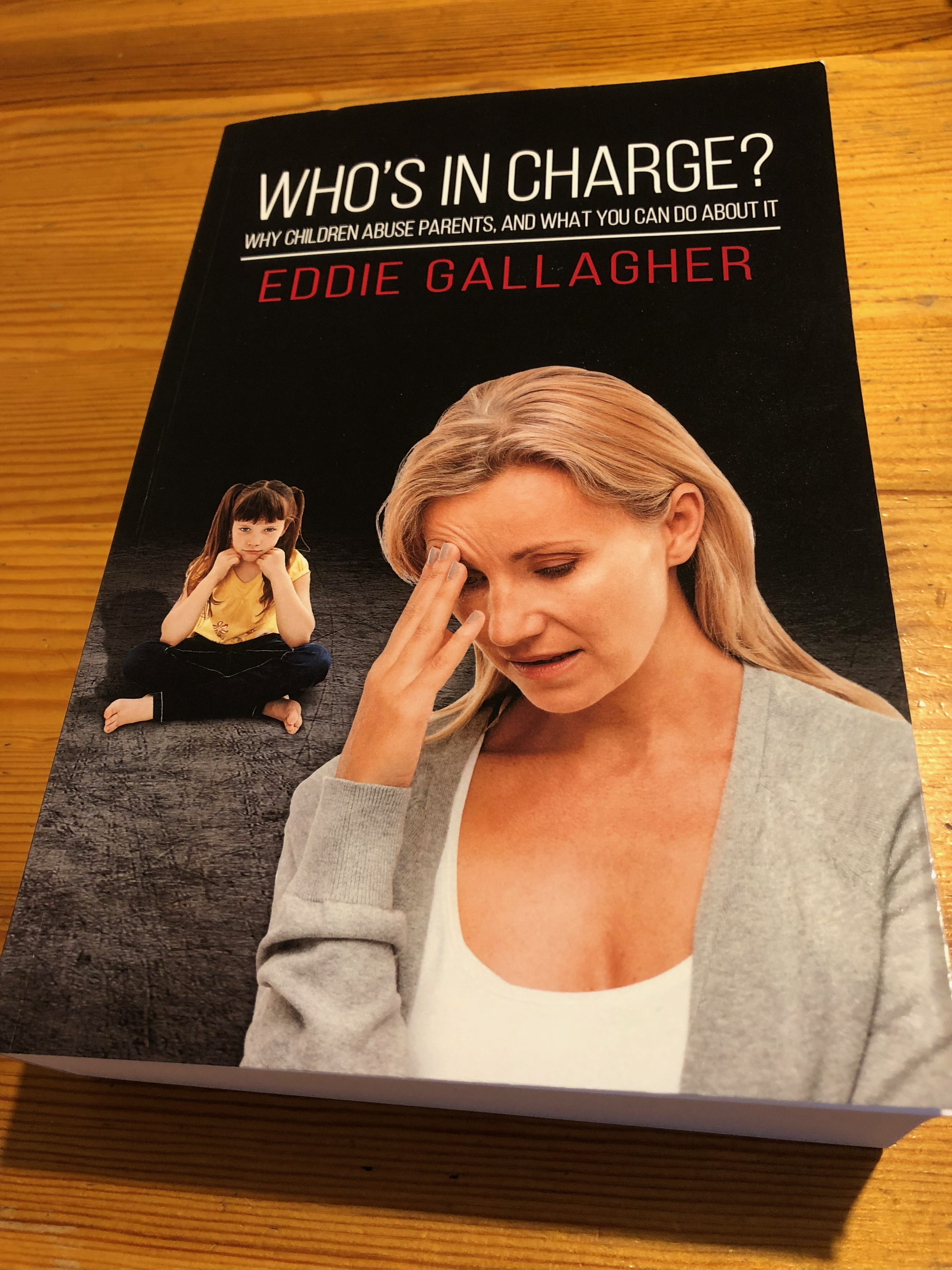
Many of us have been waiting a long time for this book to appear. Whether you prefer to think about it as a bible or a brain is up to you, but the 500+ pages represent the outpouring of Eddie Gallagher’s understanding and thinking over nearly 25 years in the field of children’s violence and abuse towards parents, drawing on both available literature and his own significant practice experience, working with families individually and in developing the Who’s in Charge? model of work with parents. Continue reading
Filed under Book review
CPV, who needs a definition?
For as long as I have been working and thinking in this field, people have been talking about the problem that there is no official, agreed definition of child to parent violence (or whatever we are going to call it.) There are many and varied reasons why people have thought that having a definition might be quite a good idea. Essentially these are to do with naming it as ‘a thing’, with parents recognising what they experience as abusive, with services being better able to respond, with the possibility of counting something if we name and define it, with the hope of developing policy and practice responses at strategic level.
There were some raised eyebrows then at the recent N8PRP conference on Improving Policing Research and Practice on Child to Parent Violence and Abuse, when it was suggested not once, but twice, that a definition might be more trouble than it was worth and we could do without one altogether! Stick with me, and you can then decide for yourself whether the arguments made sense. Continue reading
Filed under Discussion
Kinship Care Survey
Grandparents Plus would like your help with their Kinship Care State of the Nation Survey.
If you are involved in kinship care in the UK, whether recently or for the long haul, please do take ten minutes to complete the survey which you can find here.
Filed under Research
An evening with Eddie Gallagher
Eddie will be visiting London on 20th September and there is an opportunity to meet with him to talk about child to parent violence and the Who’s in Charge? programme, which he developed many years ago in Australia. Eddie will also have copies of his book, Who’s In Charge? Why children abuse parents and what you can do about it, which is to be published at the end of this month.
The evening is designed for Trained WIC? facilitators, commissioners, managers, and practitioners wanting to know more about CPV and the WIC? programme.
Booking is essential for this event. Please see the Events and Training page of this website for more information.
Filed under Announcements, Training opportunities
Child to parent violence: An uninvited guest
An email to the RTE Radio 1 show, read out by Ryan Tubridy on 30th April, expressed a mother’s despair and sense of helplessness over her 9-year-old son’s behaviour towards her: “I wonder if it’s possible to admit that you can’t help your child … It’s extremely difficult to talk to people about it… You feel like you have failed your child… like it’s your fault, you’ve done something to create this.” Despite assessments, medication, therapy, courses, and other support, the violence towards her continues and she feels as if there is nothing left she can do. Reading the transcript from the show, it is easy to share the sense of helplessness. Where do you turn when all the traditional methods have led nowhere?
The email prompted a call to the show from Madeleine Connelly, senior social worker and family therapist. She highlighted the importance of parents feeling able to say they have come to the end of the road – without then being subject to shaming and judgemental responses. Talking about the abuse; ‘pressing the pause button’ – choosing to respond to a crisis at a later moment; and finding a support network, were then described by her as powerful steps to take as reported by the parents themselves. Finally, she stressed the importance of separating the behaviour from the child, with an expression much used in the practice of Non-Violent Resistance – the child is not the problem – the problem is the problem. “What we do is encourage parents to see the behaviour as an uninvited guest or an infection, that it’s not the child, it’s a behaviour, to separate it out. The problem is the problem, it’s not the child, and that helps parents to look at different ways of seeing the problem and then working together with the child.”
Working together with the child to overcome the issues – since we should not assume the child is happy with the situation – and offering hope in an apparently hopeless situation, two strong messages to take away!
Filed under radio and video
Who’s in Charge? at BASPCAN 2018
I am very excited to hear that Carole Williams and Nicola McConnell are presenting a free paper at BASPCAN 2018 this week in Warwick. If you’re attending then don’t miss this opportunity to hear more about the Who’s in Charge? programme and to support the team! Their paper is titled “Preventing child to parent violence: An evaluation of the ‘Who’s in Charge?’ intervention for parents within the UK” and is part of the Violence in the Family thread on Tuesday 10th April (11.00 – 12.30) in OC 0.04. Nicola has analysed the programme data from 2012 – 2016 and has some good findings and evidence that the programme is making a difference, particularly when parents are helped early on. I hope to be able to post more information about this soon.
Further details about the Who’s in Charge? programme can also be found on the updated website.
Filed under Announcements

 HOLES IN THE WALL