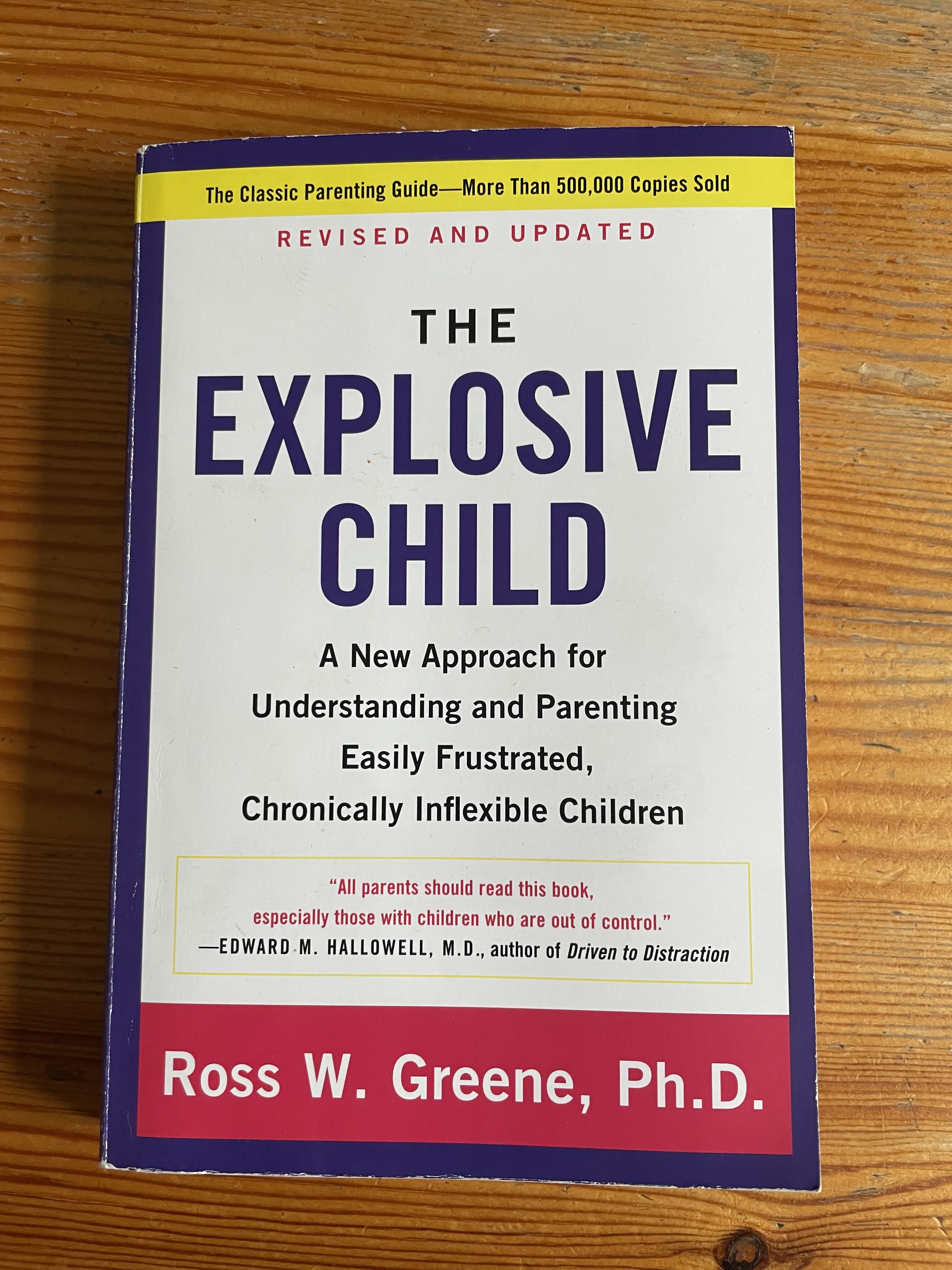
Greene offers a new way of thinking about “behaviourally challenging children”, and about their parents, which prompts a different response to their behaviour from the adults around them. While he uses the term ‘Explosive’ in the title, he admits to being a little unhappy with it as he finds the challenging behaviour to be often predictable, and also often ‘implosive’. Nevertheless, it will chime with many families, who will recognise the behaviours described within its pages. Greene lays out ‘Plan B’ in easily digestible steps as a way forward in the journey to restoring peace and safety in the home. With many examples both of the behaviour, and scripts to follow, this is a book that you could comfortably read in a couple of sessions – but don’t! With resources to download and homework to do you will be referring to this over a longer period of time.
The Respect Young People’s Service people have been busy!
Following on from my last post, they have also been looking at the way the work they deliver can be shaped by the voices of the young people. Capturing these voices is so important – and not done often enough – so it is fantastic to be able to repost this from them (with permission), with links to the new resource they have developed. Please do read the whole piece and check out other content on the Respect Young People’s Service website, for the National Directory, Community Forum, and regular news and updates.
The art of coproduction: How young people’s voices shape the Respect Young People’s Service
I am very excited to bring to your attention the landmark CAPVA (child and adolescent to parent violence and abuse) survey being launched by Respect! Despite increasing attention to this issue – and media coverage – it seems that awareness of prevalence and the impact on families by people in the wider community in the UK remains poor. Hopefully this survey will give a clearer picture of what is known and experienced, and how responses can be made more effective.
The survey is open until August 29th, but don’t leave it till the last minute!
Respect launches landmark CAPVA survey
Domestic abuse charity Respect has launched a survey, aiming to create a national picture of the public’s understanding and experiences of child/ adolescent to parent violence and abuse, known as CAPVA.
It is suggested that the prevalence of foetal alcohol spectrum disorders (FASD) is greater than autism, and yet there remains significantly less understanding of this issue, information for families and practitioners, and support for those impacted by the condition. In 2023, Waite and Burd reported that “At an estimated prevalence of up to five percent in the general population, fetal alcohol spectrum disorders (FASD) are the most common neurodevelopmental disorder”.
In the run up to the end of last year I began piling up “things to read” – and am finally finding a space to work my way through some fascinating papers and reports.
Top of the pile was the report from Liverpool John Moores University in conjunction with Merseyside Violence Reduction Partnership, Merseyside Violence Reduction Partnership – Child and Adolescent to Parent / Caregiver Violence and Abuse (CAPVA) research study 2023. The report examines the awareness of CAPVA in the Merseyside area, and the current responses to it, as well as making a series of recommendations for the development of both going forward. For the study, the team interviewed a number of practitioners and families to inform their findings, and there are extensive quotes from them within the report which bring energy and emphasis.
I wish all those reading this a peaceful and encouraging new year.
It is customary to hope for new and better things in the year ahead, but we know that for many families the passing of time seems to bring only a consolidation of their anxieties and pain. The holiday period can be especially stressful and so many people will be emerging bruised and battered – and not just emotionally. But there are reasons to be hopeful as we face the coming months and I would like to share some with you.
When the first Home Office guidance document for those working with what was then termed Adolescent to Parent Violence and Abuse was published in 2015, the need for a revision / update became clear very quickly as new understanding and methods of work developed. Amongst those insights was the prevalence among much younger children, impacting particularly the ways the behaviour was conceptualised; leading to problems around an agreed terminology and definition.
Over the years, countless researchers and reports have called for the establishment of a working group to consider these issues. We recognise that there remain many different terms in use, all for very particular reasons. But without agreed terminology and in the absence of an official definition, problems remain with the collection of data, the compilation of statistics, the commissioning of services, and – most importantly – the understanding and recognition by families of their experiences and the ability to ask for help in a way that is immediately understood.
After many years of meetings, changes of staff, changes of emphasis and focus on adult domestic abuse, the 2022 Policy Paper, Tackling Domestic Abuse included a commitment to developing a sector agreed definition; and I am thrilled to announce that we finally have a public consultation on the definition of child to parent abuse, which will include space to comment on terminology. The team at the Home Office have been working on this for many months, speaking to key stakeholders in order to produce the consultation framework. The consultation is open till 7th February, so please do take the time to have a look and send in your comments.
The organisers of this would particularly like to hear from those with lived experience: parents and young people, who are able to offer insights that may be missed by those researching and working in the field.
We often think about the language we use in work with families where there is harmful behaviour from children, but more usually in terms of what we call it (see this sentence!) or the terms we use to describe the various family members involved. This week I have been reflecting on the difficulties that arise when the language we use as professionals is different to that used by parents. I have written about this before, and included a reference in my book to a blog by Raising Devon where the author talks about the difficulties in getting help while she referred to her child’s behaviour as “tantrums” rather than “rages”.



 HOLES IN THE WALL