A couple of weeks ago I was talking with a colleague about our separate work around child to parent violence (CPV). As we rounded things up, a third person, who had been listening in, asked if they might make a comment. They told of a friend’s difficulties with their child, and commented that they had not thought about it in these terms before. I wasn’t surprised. Almost without fail, when I talk about my interest and work, whether at a conference, a party, to someone I know or a complete stranger, someone will seek me out later – ask for my contact details, request a private conversation, or perhaps share their own experience there and then. Barbara Cottrell first recorded this same experience in her book, When Teens Abuse their Parents. I have heard of similar experiences when a media outlet has covered this or another aspect of family violence. Suddenly there is much to-ing and fro-ing in the corridors, as reporters or other staff find someone safe to disclose their concerns to. Continue reading
Tag Archives: CPV
CPV, starting to count at last!
On August 7th, The BBC published a story on their website – and also covered it on national and local radio – titled Domestic Violence: Child-parent abuse doubles in three years. The BBC piece is clear and succinct, with a straightforward laying out of the statistics, comments from Young Minds and the National Police Chiefs Council (NPCC), a brief case study concerning a parent of an 11 year old girl and the help received from the Getting On Scheme in Doncaster, and a short video highlighting the work of Break4Change in Brighton. The figures were obtained through Freedom of Information (FOI) requests to the police for the period 2015 – 2018, for records of adolescent to parent violence and abuse (APVA). Of 44 forces contacted, only 19 collect the data in a way that is able to separate out APVA specifically. Continue reading
Filed under Discussion, news reports
CPV: when it’s too shameful to speak the words …
Joining a growing library of leaflets and booklets designed to help parents understand and obtain help around child to parent violence, is a publication from South Tyneside Adults and Children Safeguarding Boards. Ranging from a simple one page leaflet, to more comprehensive booklets, these publications typically give information to parents and carers to help identify whether they might be experiencing abuse, explanations of why abuse might be taking place as well as steps they can take to minimise it, and local or national contact details. Continue reading
Filed under publications
#CPV on Drivetime
A huge thank you to Eddie Nestor, of BBC Radio London Drivetime, who devoted more than half his programme yesterday to the topic of “children who hit their Mum.” You can catch the programme by following this link. The show is available till the end of May. Eddie starts off by interviewing Yvonne Newbold from about 1:21.00 and then takes calls from around 1:48:00.

Filed under Discussion, Family life, radio and video
CPV: Some good news!
It is always a pleasure to be able to share good news – in a field of work that is too often full of pain and frustration. So I was thrilled to hear about the recent award to Sue Pearson, Education Officer for the Leeds Youth Offending Team, by the Butler Trust, in recognition of ‘the empathy and skill she brings to her “life-changing” work with troubled families, and for the dedication and compassion she demonstrates in addressing the issue of child-to-parent violence’.
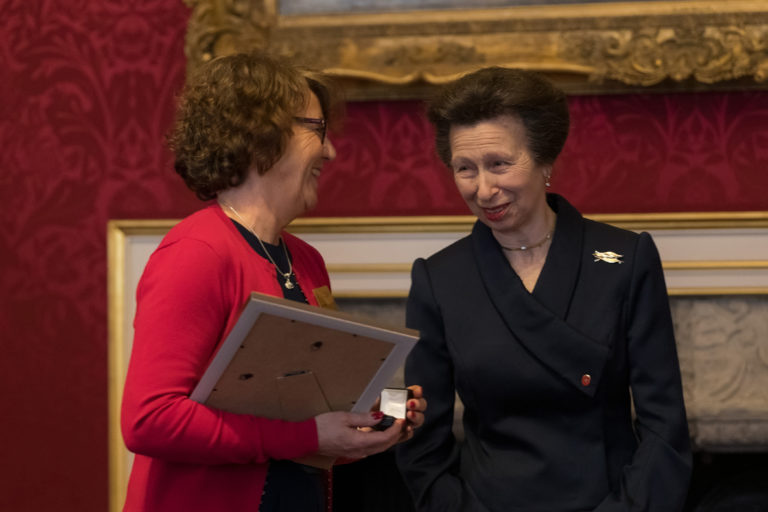
Sue received her award from HRH The Princess Royal. (Photo from Butler Trust)
Filed under Announcements
CPV: Fighting for a kinder, person-centred response in the future
For the last few years it seems, in amongst all my other CPV posts, I have thought, discussed, and posted a lot about the experiences of adoptive parents experiencing violence or abuse from their children, but this year feels already like there’s going to be a lot of attention – rightly so – given to those struggling with the behaviour of their children with learning difficulties or disabilities. With the treatment of children and young people in assessment units very much in the news, expect to hear even more! For many, the conflation of this type of behaviour – identified as a response to anxiety and stress in the face of unreasonable (and often very reasonable) expectations – with deliberate, manipulative acts of violence and control from some neuro-typical children does not sit easily. Indeed, Yvonne Newbold has coined the term Violent Challenging Behaviour to make this distinction.
This post, Time to breathe out, from a mum blogging about Life with Aine, starts us off. Continue reading
Filed under Discussion
CPV: Standing together
I am breaking my silence.
I am breaking my silence for any person who is a stepparent, and they are living in a dangerous situation at the hands of their stepchildren.
I am breaking my silence because I know what it is like to scourer the internet trying to find someone or some resource to signal that I was not alone.
So begins a post from Dr Sam Kline. You can read the rest of the post here, and there is the promise of a follow up on her site in a week or so. You will recognise many of her comments: Continue reading
Filed under Discussion, Family life
CPV: Looking forward with hope
Well, it’s been an interesting year, culminating in a hectic last few weeks!
Thinking about what to write today I flicked back through old reports, including that written by Parentline Plus ten years ago, “You can’t say go and sit on the naughty step because they turn round and say make me”. In some ways it feels as if nothing has changed, the same stories from parents, the same understanding of background risk factors, the same difficulties in accessing help. But what does feel different is the volume of coverage, and the gradually changing tone. Continue reading
Filed under Discussion
Confined Spaces, an interview with Sophie Cero
Do you like your art calming and reflective, or maybe you enjoy the challenge of something complex and abstract? For thousands of years, artists have used their work to comment on the human condition, and to explore ideas of power, truth, and reality. Nevertheless, you might be thinking, “but what can art tell us about child to parent violence?”
What I like about any new way of looking at things is that the questions are slightly different, the insights often trip us up and change the direction of our thoughts, and we can be left with new questions that we hadn’t even thought of before! So I was excited to come across artist, Sophie Cero on twitter and to hear about her work exploring child and adolescent violence towards parents. Sophie kindly agreed to be interviewed for Holes in the Wall. Continue reading
Filed under Discussion, Family life, Research