A number of new papers – academic and discussion – have been published recently, and I have gathered them all up here together for ease. Continue reading
Tag Archives: CPV
Child on Parent Violence – DfE Expert Advisory Group
With permission, I am reblogging this post by Al Coates, from his site: Misadventures of an Adoptive Dad. (Wednesday March 29th 2017). Al is a member of the DfE Advisory Group on fostering and adoption, and has been instrumental in bringing the issue of child to parent violence to the attention of the Department.

It was the quarterly Department for Education’s Expert Advisory Group on Adoption Support. Today was the usual updates on this and that and a few larger issues addressed such as the working out of the role of the Virtual School Heads. We focused to how the Adoption Support Fund was progressing, of course there are challenges but to date nearly 18,000 children had been helped and that the fair access limit remained above the average cost of the vast majority of applications. No help if you’re over with match funding and a difficult issue for some but 80 families have been match funded, which is more than I’d envisaged.
We had a discussion around the incoming legislation of the Virtual School Heads with NAVSH represented in the room they gave a good account of how they envisaged it playing on the ground. It is was a good discussion and there’s room for encouragement and optimism. Of course there are uncertainties as we move into new responsibilities and grey areas but without doubt we are heading in the right direction, it would have been nice to have heard Gareth Marr’s thoughts as we discussed the role.
The final item on the agenda was Child on Parent Violence, I’d asked for it to be there.
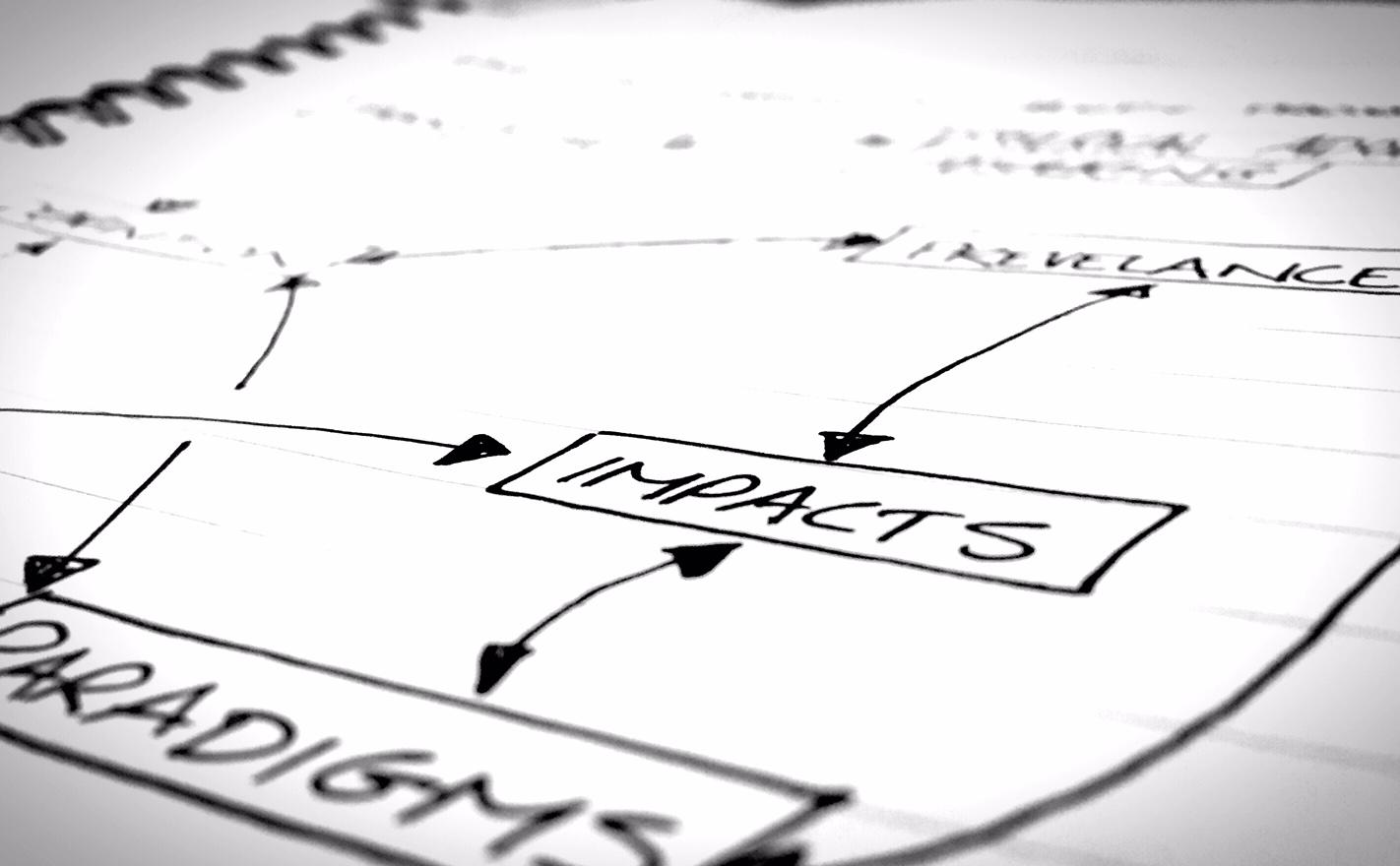 |
Drawing tougher all the findings from the Survey that I’d undertaken and the subsequent findings that Dr Wendy Thorley had made sense of in the first and second CPV reports that laid it all out. It’s too much go through verbatim and a text version of a 45 minute presentation is too much to bear so here we go in eight words.
Taboo (fear of response, isolation, criminalisation, ignorance, stigma, victim blaming)
Paradigms (different professionals view it very differently
Definitions (the trouble with them)
Causes (complicated)
Prevalence (lots, 30% ish)
Impacts (massive)
Responses (shocking)
Actions
Paradigms (different professionals view it very differently
Definitions (the trouble with them)
Causes (complicated)
Prevalence (lots, 30% ish)
Impacts (massive)
Responses (shocking)
Actions
It was well received, they’re a polite bunch, but I do think the collective minds and organisations in the room took the message to heart.
Child on Parent Violence is a ‘thing.*
This is a thing that we need to act on, a complicated, ugly, painful and prickly thing that needs to be grasped. As one member noted, not a can of worms but a bucket of worms.
Actions is the interesting bit, so what do we do next?
That’s the question, what do we do with this ‘thing’, first we call it a thing and we start to raise awareness and we start to consider if this as big as we suspect and believe that we make it a part of Social Workers Continual Professional Development.
We consider how we prepare adopters to let them know it’s a ‘thing’ and it’s ok to say it’s happening.
We liaise with safeguarding and tell them about this ‘thing’.
We develop out knowledge of interventions and what works in a real world situation.
The DfE are going to talk to the Chief Social Worker about their views and knowledge.
Today felt like a start line not and maybe a consideration of what may be the first steps in removing the taboo and developing the culture that makes it ok to ask for help and ok to say you’re not ok.
I apologise that this is all a bit vague, it’s late and having thought hard about this for a long long time and lived to varying degrees with it and in it. I feel very sleepy all of a sudden.
On another note I’m thinking of getting the presentation, with other stuff, out to a wider audience and there’s even talk of putting on a free event for whoever’s interested and recording it, podcasting and you tubing it. I’m pondering that thought so if that’s of interest let me know.
All in all a good day.
*Speaking to a group of Social Workers last week a senior practitioner said “We knew that this happened but we didn’t realise it was a ‘thing’.”
If you have found this of interest then please do check out other posts on Al’s site.
Filed under Discussion
CPV: So what does it look like, Part 1.
This is a post I have had in mind for a while, and which has been changing shape faster than I can write. As a result, this is going to be part 1, and I will continue the discussion over the next weeks and months. It really develops two themes and questions: what are we actually talking about when we present training or speak about child to parent violence (CPV); and where are the edges of the definition – what’s included, who’s included, and what and who’s not? It is something we need to address. I am often asked for examples to illustrate a discussion or seminar. It is lazy to simply assume that people understand the concept just because we have become familiar with it. “The outside world find it hard to imagine. As a mother you don’t broadcast it to the outside world because its not something you’re particularly proud of.” (Rosie Noble) But as more and more people start to speak out and to use the phrase “child to parent violence” it inevitably stretches a bit at the edges.
Many years ago now – by CPV standards – Eddie Gallagher gave a handy list of the types of family situation that might be affected (in his experience) by child to parent violence. Since then the list has grown, and it inevitably includes examples that make us a bit squeamish in including them under an official definition: severely disabled children for instance, or those acting in self defence. I have sometimes pondered how parents themselves feel about including themselves in a CPV definition. Indeed, I have asked parents of children with ASD whether they feel it is appropriate to their situation. Is that how they experience the situation? Do they feel they need to protect their child by rejecting the definition? Are the types of help currently available completely inappropriate to their situation and so it does not seem to include them? I meet parents of children with a learning disability who describe persistent and escalating levels of violence and abuse, that in many ways matches the experience of families with adopted children, or families who have experienced domestic violence, or with mental ill health. And of course in each situation there may be layer upon layer to consider. There is rarely one clear cause or trigger, and for each family it will look and feel slightly different.
Is it taboo to admit your child with disabilities hits or bites you? On Woman’s Hour, on February 21st, Jane Garvey introduced a segment about caring for a child with disabilities. You can hear the programme here, and the discussion lasts from the start to 25 minutes in. There are interviews with Nikita, parent of a five year old child, Nayan, with microcephaly, who shows tremendous resilience in the face of regular tantrums and lashing out which comes from frustration; with Rosie Noble, Family Support Manager at Contact a Family, who offers reassurance that things can get better; and with Yvonne Newbold, mother of Toby, who has written extensively about caring for a child with disability. Yvonne has since blogged about the experience of appearing on the programme, and about her decision to speak out. I highly recommend her blog both for the honesty of the encounter, and for information about Yvonne’s wider campaigning to improve support for families experiencing long term, significant levels of violence from their learning disabled children. I’m not going to repeat the details here. If you are interested in knowing more about Yvonne’s experience then please do check out her website. She has organised a groundbreaking conference for the coming weekend, following her Woman’s Hour appearance, and I hope to post more information about her campaigning in the coming weeks.
For what it’s worth, I don’t think Nikita’s situation would be included by many people within a CPV definition. That is not to diminish the level of violence she and her husband face – and sadly may continue to experience, but to question the level of control or intent involved in the hitting and lashing out. But how will we feel as Nayan becomes older, bigger and stronger? What about Yvonne and Toby – how is their situation different? Is it different? The issue of intent is one I will return to in later posts, as it seems to be a central part of the conversation, and yet raises more questions than it answers.
If that’s not enough questions, I want to conclude by drawing some thoughts together and throwing a final one out there for discussion.
When we discuss child to parent violence we are not talking about the odd push or shove, about stroppy teenagers, or about an argument we once had that got out of hand. The phrase is used to describe a pattern of persistent and often escalating violence and abuse over perhaps years, from a child or young person towards their parent or carer. The routes to CPV are many and varied, and frequently overlapping. Each family situation is unique, and yet there are many commonalities, not least in the actual day to day experience and damage – physical and emotional that is done. Nikita describes the pain and hope of living with a disabled child. Yvonne has years of experience and has taken a decision to break the silence, to encourage others to speak out, and to campaign for better support. These are just two examples of what CPV might look and feel like.
So my question(s): Does that help your understanding or does it complicate it? And if you have a disabled child yourself, how do you feel about being included within the definition of child to parent violence? As always, please do join in the conversation!
May 3rd 2017: I’m adding on a bit here rather than starting a new post, because I think it furthers these particular thoughts.
Yvonne Newbold has continued to add to her own website over the last weeks, and this includes a page about dealing with violent and challenging behaviour from children and young people with neuro-disabilities. I think it is significant that Yvonne chooses to use this phrase – VCB rather than CPV – in this situation.
Filed under Discussion
The use of restorative work in CPV: where it diverges with IPV
The recent publication of the paper, Under the Radar: The Widespread use of ‘Out of Court Resolutions’ in Policing Domestic Violence and Abuse in the United Kingdom, by Westmarland, Johnson and McGlynn, once again draws attention to the differences between adult perpetrated DVA and child to parent violence. Continue reading
Filed under Discussion
CPV survey: 1st impressions
At the end of November 2016, Al Coates, an adoptive parent and social worker, put out on social media a survey asking parents about their experience of child to parent violence. You can read more about it here and here. He received 264 responses over a three week period, largely – unsurprisingly given the main mode of dissemination – from adoptive parents. The collation started straight away and a first paper was put out at the start of the new year. First Impressions is available from the CE< website, part of the University of Sunderland. Dr Wendy Thorley, of the University of Sunderland, is a member of what might broadly be termed the Steering committee for this project, and she has helped to edit the report.
The survey asked questions about a family’s experience of child to parent violence, and about the age at which it started, the impact on the family, and about the help that had been offered – or not. Continue reading
Filed under Discussion, projects, Research
CPV: have you or someone you know been affected?
Over the last weeks I have been involved in a number of long conversations with people about the harsh realities of living with a violent child, and their sometimes exhausting journeys to finding help and advice. This is truly one of those things that people struggle to understand unless they have been personally touched – it is such an alien notion and no-one can really understand the violence and rage a child can show until they have witnessed it first hand.
Over the years, research around the world has started to uncover the extent of the problem, to speculate on causes, characteristics, correlations …. but all (as far as I am aware) has come from academics and professionals in the field. Now a parent experiencing violence within their own family is seeking to promote understanding of the issue, initially by surveying parents in a similar position and then using the data gained to commission further research and services. Al is an adoptive parent but wants to open this out to all families experiencing violence and abuse, whatever their situation, and to include grandparents and other carers too. You can read the rationale for the survey here, or go straight to the survey here. This is aimed at families living within England and Wales in the first instance.
There is of course some guidance for professionals already published, specifically the Home Office Information guide on adolescent violence and abuse, which forms part of the VAWG strategy; and amongst the small number of books available there is also discussion of different approaches. Nevertheless, while some professionals are now very much on board and fully supportive of families, there are sadly too many still unaware of the degree of violence experienced, the impact on family life and the harm caused to both parents and child without proper support.
Please do support this new venture by completing the survey yourself if appropriate, or by passing it on to others you know. Thank you.
PLEASE NOTE: THIS SURVEY IS NOW CLOSED
Filed under Research
Adoption and Fostering Podcast, child to parent violence
I was privileged last week to have a conversation about child to parent violence (CPV) with Al Coates, adoptive parent, social worker and adoption expert, as part of his series of podcasts on the website Misadventures of an Adoptive Dad. Al has kindly allowed me to reblog the podcast here, but please do go over to his website and check out the other posts and interviews. The full version of his post can be found here. Al gives a thoughtful, informed and sometimes rawly honest account of fostering from both sides of the fence.
CPV is a big issue for many adopters (see the report : Beyond the Adoption Order), and it has been interesting to watch over the last couple of years as parents have gradually felt more at ease in discussing their experiences on line. It is important that these conversations continue in order to support one another, but crucially also so that other people hear the extent of the struggle, fear, anguish and exhaustion; and start to develop proper resources.
Filed under Discussion
Beyond Parental Control: no attribution of blame.
What happens when it is no longer safe for a child to remain at home? Sometimes children go to live with another family member, perhaps an absent parent, or a grandparent, aunt or uncle. I have heard of a young man going to live at his girlfriend’s parents’ house. These sorts of arrangements can work well, particularly if the violence and abuse is very specifically directed to only one person. But if it is more general, then the chances are it will re-emerge in the new home and this arrangement will also break down. Some young people may find themselves admitted to hospital where their risky behaviour is considered to be caused by mental ill health. Some may end up in youth custody as the result of a very serious assault. Others, perhaps the majority, will be taken in to the care of the local authority, whether as a voluntary agreement or on a care order, as “beyond parental control”. (Where you end up then seems sadly to be something of a lottery and must be the subject of future posts.) Continue reading
Filed under Discussion, Law
A story of knives and cuts – with a little bit of hope at the end.
What is it with knives? (I’m sure someone will answer that for us!) So many parents report the use of knives in the abuse they face from their children. I clearly remember a conversation with Julie Selwyn after publication of Beyond the Adoption Order, about the frequency that they had been mentioned in conversations with parents about their adoption journey. And I remember the horror in a friend’s voice as they described their early experience of fostering – which also marked the end of that venture for them. When people talk about being at “the sharp end” of a child’s anger, frustration and pain, this is too often what we are talking about. Continue reading
Filed under Discussion
Breaking the Cycle of child-to-parent violence and abuse
It’s always good to see new books published in this field, and so I was pleased to take a look at this “self-guided course for parents of angry, aggressive adolescents or teens” from Elaine Morgan and Laurie Reid. Published by Breaking the Cycle Consulting, Breaking the Cycle of Child-to-Parent Violence and Abuse is available direct from the authors or from Amazon.

Filed under Book review