At the start of the month, the Government published the Statutory Guidance to the Domestic Abuse Act 2021, taking into account the results of the consultation process which took place in the latter part of last year. The guidance document is intended to “to increase awareness and inform the response to domestic abuse. It also conveys standards and promotes best practice.” The various chapters consider an understanding of domestic abuse, recognising domestic abuse, the impact on those involved, the different needs and circumstances of individuals affected, and agency responses – whether individually or as part of multi-agency groupings. While the vast majority of the document deals with abuse perpetrated by adults, it is important that there is also included the issue of young people’s harmful behaviour, whether towards their peers, or towards their parents / carers.
Continue readingTag Archives: Adolescent to parent violence and abuse
New work on APVA draws attention to links with sibling abuse and bullying.
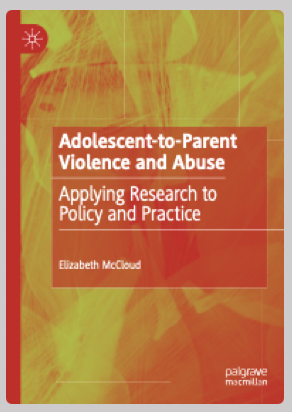
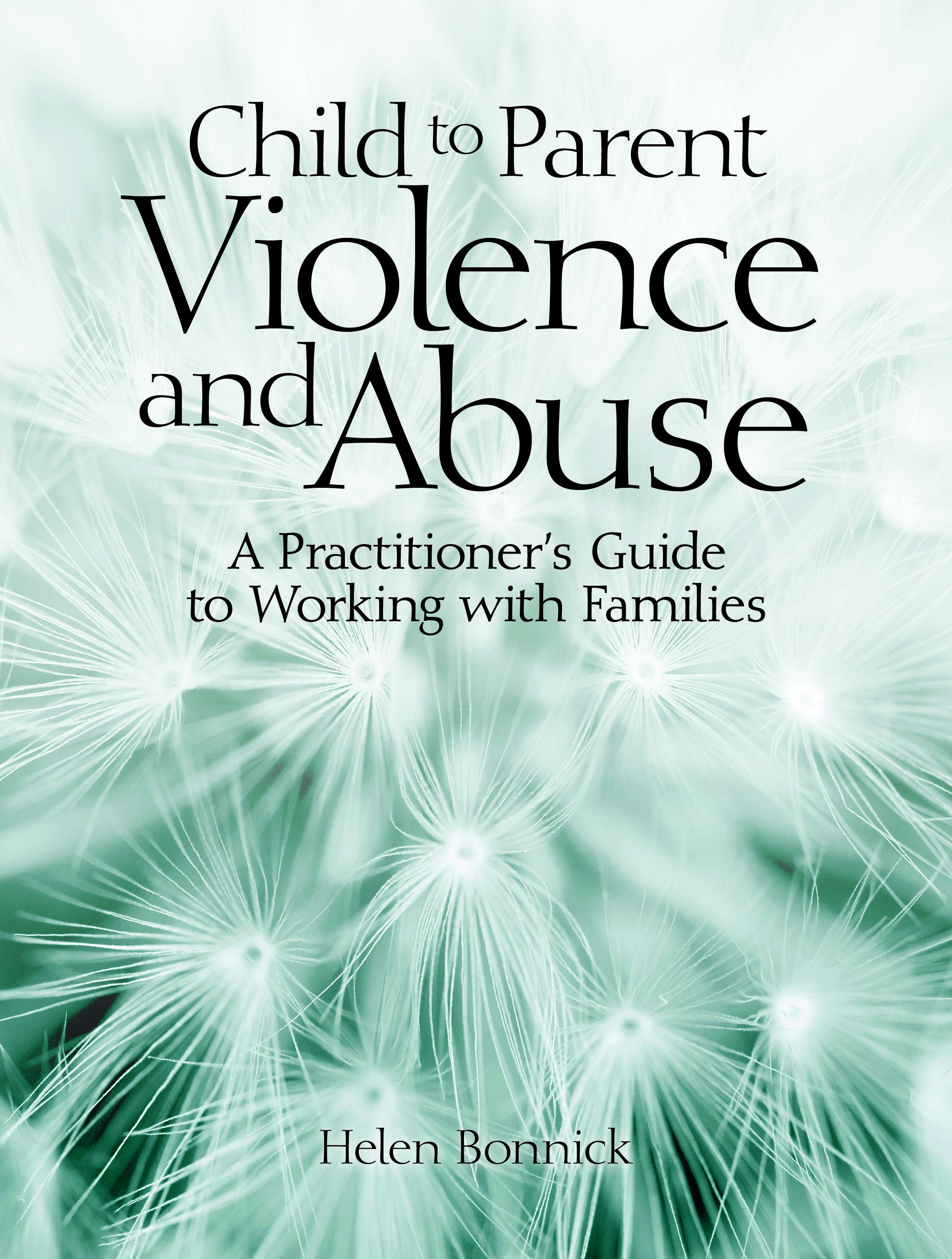
In my own book, Child to Parent Violence and Abuse: a Practitioner’s Guide to Working with Families, I included examples of how different individuals had sought to “make real” the issue of data, and prevalence of CPVA for their own work and that of other practitioners and policy makers. Elizabeth McCloud had spoken to me at a conference some years earlier about the project she was undertaking, and she is one of the people referenced in my work. So I was thrilled to hear that her research was completed, and available to all. My one regret is that I did not find the time to read this earlier.
Continue readingFiled under Book review, Research
Adolescent to parent violence – hearing from the young people themselves.
Exploring adolescent violence and abuse towards parents: the experiences and perceptions of young people, Victoria Baker. A thesis submitted in partial fulfilment of the requirements for the degree of Doctor of Philosophy at the University of Central Lancashire, August 2021.
Much work exploring child and adolescent to parent abuse comments on the difficulties inherent in hearing from the young people themselves, skewing the literature towards an interpretation of the phenomenon through a particular lens. Sometimes parents feel uncomfortable putting their children forward, sometimes agencies express concern that it would be inappropriate or potentially damaging, sometimes ethical factors around risk preclude the involvement of these voices in research. As a result, there is a focus on the point of view of parents and practitioners, and an important aspect of understanding and analysis has been absent up to now.
Continue readingFiled under Research
Child and Adolescent to Parent Violence and Abuse during Covid-19
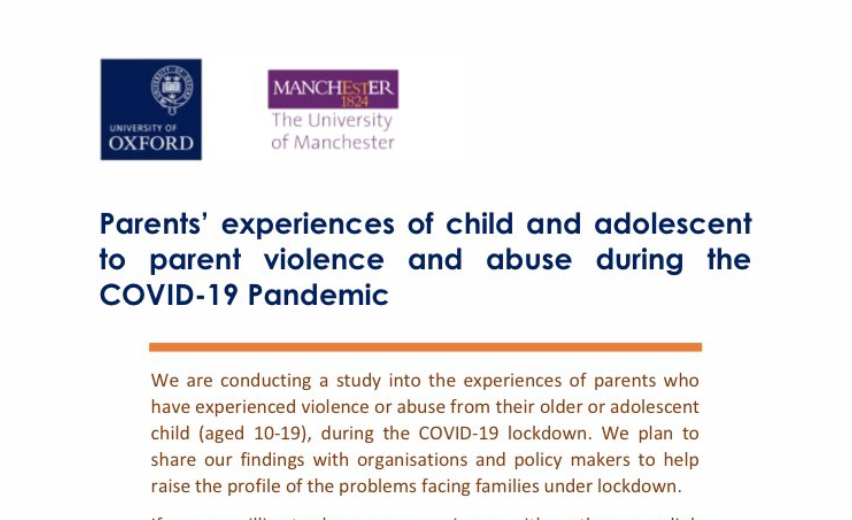
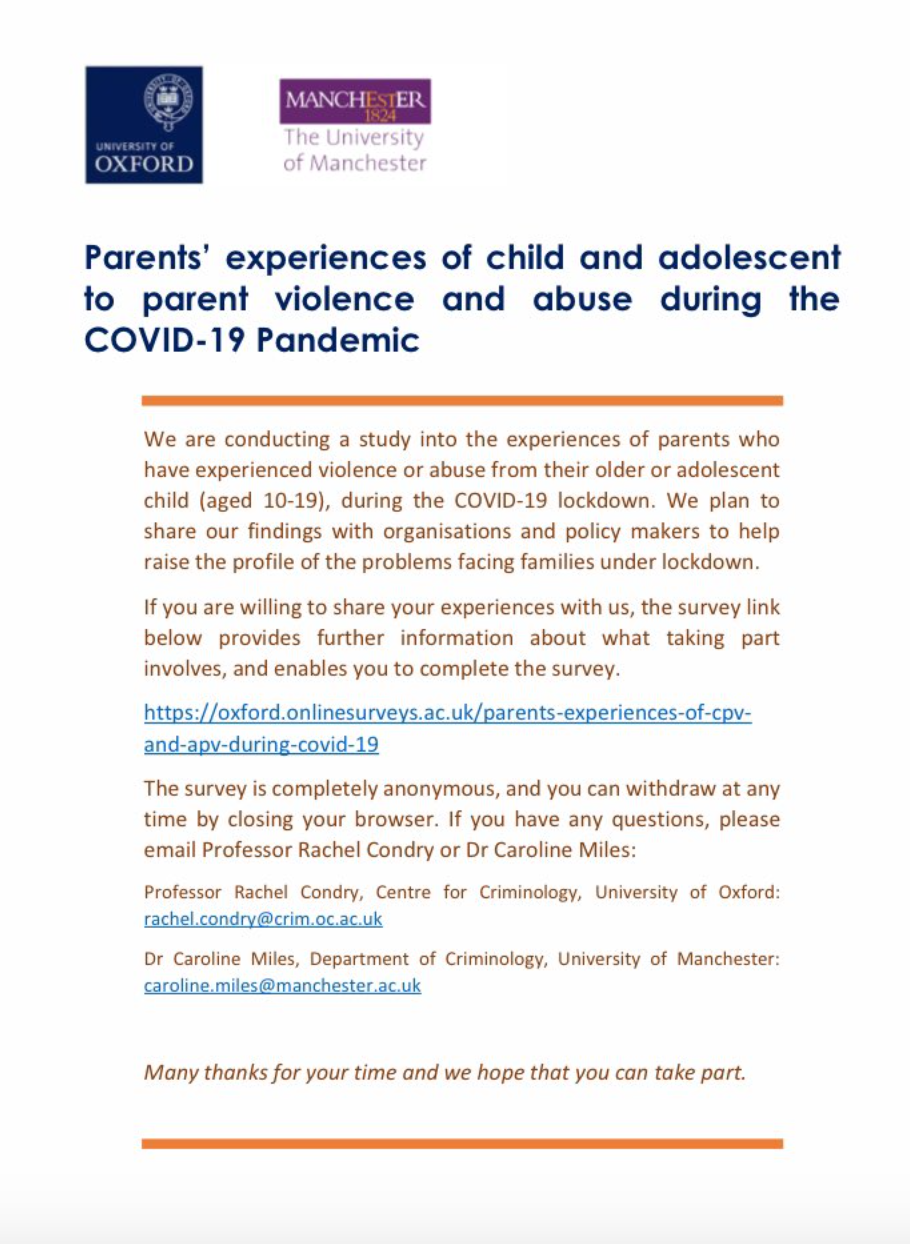
Last week I was interested to follow a number of conversations about some of the consequences of Covid-19 on family life. While there have been many tragic examples (for instance, increases in domestic violence abuse and homicides, in the risk of child exploitation, and in child care proceedings), it was notable that some people were also talking about the lightening of the load for their children, the increase in wellbeing even, and the easing of strained family relationships. Continue reading
Filed under Announcements, Family life, Research
Updating the APVA Guidance Document
Five years ago, after many months of creative debate and editing, we launched the Home Office guidance document on Adolescent to Parent Violence and Abuse (APVA). It was part of the government’s commitment through the VAWG strategy, but also fulfilled a need identified at the launch of the findings of the Oxford research project into APVA.
Filed under Discussion
Where are the posters on the back of toilet doors?
A few weeks ago someone tweeted a photo of a poster in a toilet cubicle advertising domestic abuse services (in this case in Australia), and it reminded me of a plea which had been made at a conference I attended, that we should make it easier for individuals to find out about the help available to them if they are being abused by their children …
Filed under Discussion
#APVA: Change prompted by a Domestic Homicide Review
I am pleased to bring you this post from Neil Blacklock, Development Director at Respect, who has been following recent developments in Northumbria.
In November 2015, in Northumbria a mother was murdered by her 16-year son. The resulting Domestic Homicide Review (DHR) reported that safeguarding structures designed to identify and protect victims of domestic abuse were not attuned to pick up and respond to Adolescent to Parent Violence and Abuse (APVA) and that agencies had not fully understood the risk that her son posed. Continue reading
Filed under Discussion, Policy, projects
CPV, starting to count at last!
On August 7th, The BBC published a story on their website – and also covered it on national and local radio – titled Domestic Violence: Child-parent abuse doubles in three years. The BBC piece is clear and succinct, with a straightforward laying out of the statistics, comments from Young Minds and the National Police Chiefs Council (NPCC), a brief case study concerning a parent of an 11 year old girl and the help received from the Getting On Scheme in Doncaster, and a short video highlighting the work of Break4Change in Brighton. The figures were obtained through Freedom of Information (FOI) requests to the police for the period 2015 – 2018, for records of adolescent to parent violence and abuse (APVA). Of 44 forces contacted, only 19 collect the data in a way that is able to separate out APVA specifically. Continue reading
Filed under Discussion, news reports
VAWG Strategy: Lack of Progress update for CPV
The Home Office published its latest VAWG Strategy papers this week, with the Ending Violence Against Women and Girls 2016 – 2020 Strategy Refresh, and the Ending Violence against Women and Girls Action Plan 2016 – 2020 Progress Update. Once again, I was disappointed to see that there was no mention of children’s and adolescent’s violence and abuse towards their parents, though not entirely surprised since it is has not featured as a specific issue since 2014, and only one line mention in 2016. The irony is that, at a local level, many areas are now developing their own strategic response; but by omitting this aspect of violence and abuse from central government documents – and thinking – it remains invisible, unconsidered, and unimaginable for too many people. Continue reading
Filed under Policy
CPV, who needs a definition?
For as long as I have been working and thinking in this field, people have been talking about the problem that there is no official, agreed definition of child to parent violence (or whatever we are going to call it.) There are many and varied reasons why people have thought that having a definition might be quite a good idea. Essentially these are to do with naming it as ‘a thing’, with parents recognising what they experience as abusive, with services being better able to respond, with the possibility of counting something if we name and define it, with the hope of developing policy and practice responses at strategic level.
There were some raised eyebrows then at the recent N8PRP conference on Improving Policing Research and Practice on Child to Parent Violence and Abuse, when it was suggested not once, but twice, that a definition might be more trouble than it was worth and we could do without one altogether! Stick with me, and you can then decide for yourself whether the arguments made sense. Continue reading
Filed under Discussion

 HOLES IN THE WALL