Category Archives: Family life

A personal story

As part of our series on motherhood, we have the great privilege of hearing from Abi. This is a very personal story, and an important one to hear about.

Ten years ago exactly, I fled my comfortable, affluent south-west London home in the face of continued and increased physical violence, threats of violence, control and intimidation by my then 16-year-old son (his GCSE year) and verbal abuse from my then 19-year-old daughter (enduring her first year at university).  I fled because no one helped or explained what was actually going on, and my social circle had been stripped away by their father.  I was already estranged from my equally abusive family and, because I’d left my life partner, his too.

I fled because social services declared that “nothing had happened yet” when I phoned for immediate help (as recommended by social services )when I discovered two curved Swedish hunting knives under my son’s pillow and a copy of Andy McNab’s book, “The Good Psychopath’s Guide to Success”.  I fled because my GP wouldn’t come near.  I fled because six officers from the Metropolitan Police, who arrived at teatime in a small cul-de-sac, declared (after consulting with my children upstairs) that I was the problem and took my children away to be picked up by their dad for a few days, only for the very real and personal threats and/or indifference to continue, nevertheless.  Eventually, I left the country and “went travelling” for three months to try and make sense of the unimaginable.  I’m still working on that one.  Heartbreak and inner conflict doesn’t touch the sides.  However, at least I can now put it, when some people do ask what’s gone on, as “I exceeded my use-by date”. 

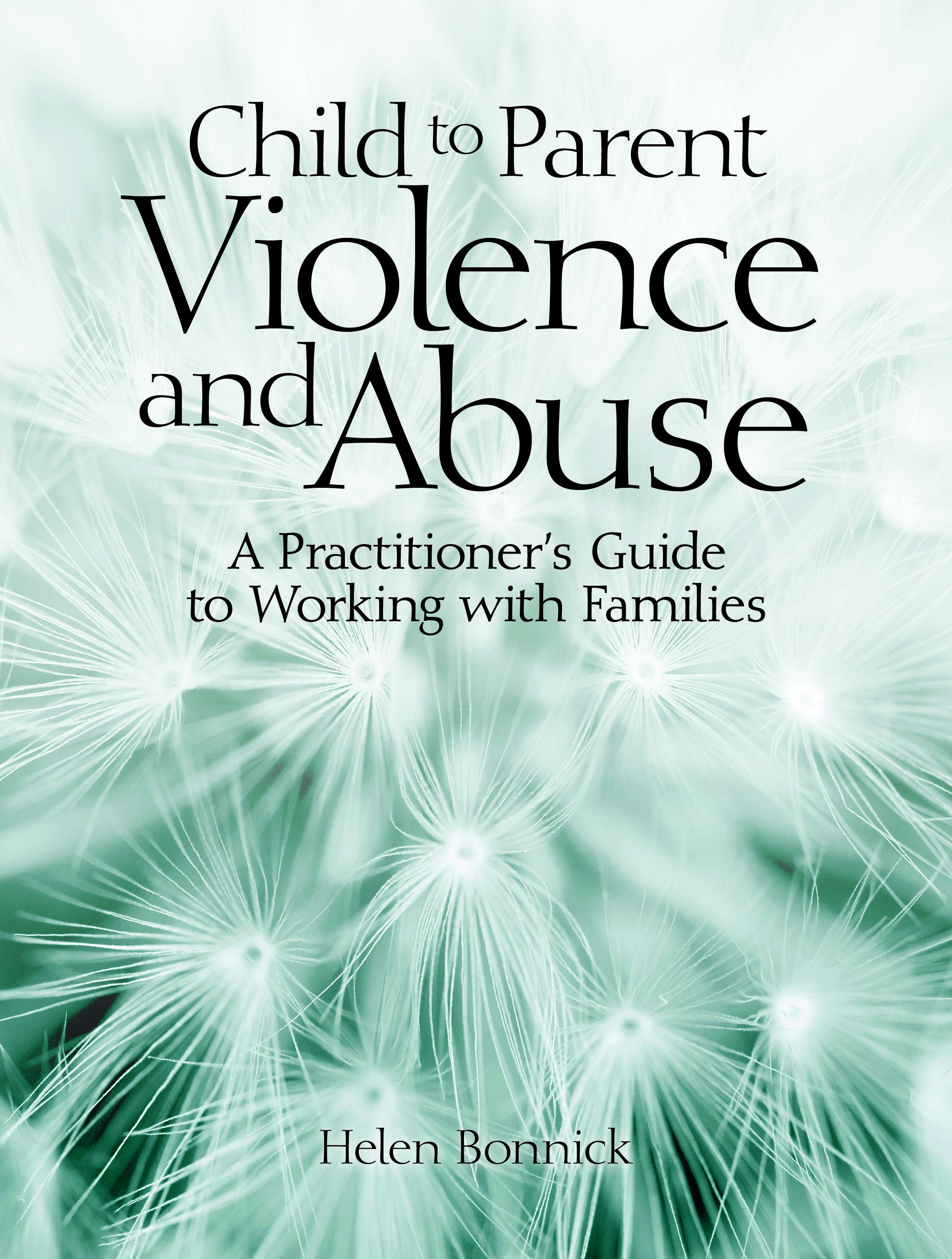
Only recently did I become aware of Helen Bonnick’s book, this website and, therefore, the other online resources and support systems that are out there.  It’s such an overwhelming relief to know I’m not actually alone with all this.  My latest GP practice and local mental health services are now very open to listening to my opinions and experience, rather than their analysis; which is a big leap forward, in my view.  That TV drama is also highlighting this cause is a great help in wording the unwordable.  I only have to ask, “Did you watch Adolescence?”

Ten years later, I’m grateful to be very alive, sane and healthy.  Many of us don’t make it, quite understandably, or become lost in the psychiatric system and/or — just as painfully — complete loneliness, exhaustion and alienation.  I’m glad to be contributing to this conversation and cause.  My MP listened to me recently and has presented my/our case in Parliament this session.  So, there will be a definition of CAPVA in the upcoming Violence Against Women and Girls strategy.  I’ve been promised continued updates and have offered my continued input, as I believe this should go far wider than VAWG, to include fathers as well.  However, it is, at least, a start and discussions are being had.

This is just a fraction of what I’d like to say, but I hope it resonates and might help you also make a bit of sense in the chaos of things.  Thanks for reading.

Abi Jones

Thank you to Abi for sharing her experience, and I hope by reading her story, you feel less alone if this is similar to your own experiences. The giant leaps forward in understanding that Abi highlight have only been possible thanks to the parents advocating for themselves and sharing their stories with those in a position to create change. We can only hope in the next 10 years we see an even greater shift thanks to women like her.

Leave a comment

Filed under Discussion, Family life

Sophie Cero PhD- Holes in the Wall update.

We last heard from Sophie Cero in October 2018 (https://holesinthewall.co.uk/2018/10/31/an-eye-for-detail-an-interview-with-sophie-cero/) when she was starting her Fine Art PhD, taking a unique approach to investigating the violence from a child to their parent. Now that this is completed, Sophie has written us an update and included some art work from the research. While other people have used art work as part of the therapeutic process, as a diary record, or as a method of illustrating research, this was the first time that the whole project has been undertaken from a visual point of view. 

You might find it helpful to reread the earlier blog first to remind yourself about her work.

Sophie is the first in our ‘mothering’ series, and we are happy to welcome her back to HITW

Explored through my artistic practice, in writing, film and objects, my Royal College of Art, PhD research project ‘Little Horror. At home with filial violence’, sought to make visible the maternal experience of CAPVA, which, as perhaps the last taboo, is one of the few instances where it is almost impossible for a mother to own and tell her own life story. Revealing it challenges the very nature of motherhood and places the mother in the role of both victim to and creator of the problem. Someone who she may love and fear simultaneously, and who above all, she wants nurture and to keep safe. To turn away from nurture and to reject the child for reasons of safety is almost impossible, every turn has a devastating consequence, every aspect of life into trauma in waiting, making the mother trapped in an impossible life with an impossible child. This mother must both protect and survive her child.

In the seven years of study, the most compelling finding I have encountered is how commonplace the experience is. When describing my research, I found it astounding how many people had had an encounter with it in some form, be it from a sibling, a neighbour or their own child. On the opposite side to this, I had several instances of open disbelief, of misunderstanding, of incredulity, with the listener being convinced that surely, I had mis-spoken, I must have meant the mother being abusive to her child. 

Working through art practice as opposed to more traditional research strategies, allowed me to develop my own methodology and to form an inquiry that would be hard, if not impossible to replicate through usual research gathering approaches. It allowed me to think around the spaces of events within the home, and to find common themes that occur within objects and places, and commonalities across different ages of mother and child. 

Finding no existing direct artistic representations, my research sought out contemporary parallels that held elements of the experience within them, in art, film and literature, taking a wide frame of reference from disparate sources ranging from Lacan to Family Guy. This study was initially underpinned by the idea of CAPVA being akin to ‘the maternal unheimlich’, considering Freud’s writing on The Uncanny, when viewed through a maternal frame. This led to the realisation that CAPVA bears resemblance to the horror film genre, relating to key elements such as ‘the scary place’, ‘the final girl’ and ‘the ominous atmosphere’. This applied to all horror tropes except for that which makes horror exciting, enticing and unpredictable, ‘the jumpscare’. Here the scares are expected and known.

I worked with existing testimonies from mothers that highlighted domestic objects as being integral to violence within the walls of the home, the objects acting as if witnesses to events. This methodology allowed for difficult stories to be retold and represented through a universalised, fictional birth mother and her (ungendered) child, Mymmy and Vic, as holders of trauma events.

I used a process of writing and diagrammatic drawing to analyse and represent the episodes of abuse, with the final outcome being to assimilate the ‘object events’ into a film script, which documents a day/18 year period of the relationship between Mymmy and Vic. It is my intention to further the research and to find funding to realise the film script in the near future.

Since embarking on the project in 2017, when research was sparse and awareness very limited, it is heartening to see that interest in the subject has increased and I hope this will continue.

Suggested Image(s)

Sophie Cero. Safeguarding wallpaper (Christmas edition) 2024

Sophie Cero. Object Event (crockery) 2021 – diagrammatic timeline drawing

Sadly it is not possible to read the final paper as it has been embargoed to protect those involved, but Sophie is on Instagram as sophie_cero and you can view more of her work there.

Leave a comment

Filed under Announcements, Family life

Post-Adoption Support in Crisis: Families Speak Out 

If you are at all interested in Adoption and LinkedIn, you will already be aware of Claire Agius, a PhD student from Manchester Metropolitan University, who has recently submitted her PhD and kindly created a post on her emotionally-aware research with adoptive parents for the final blog on our adoption series.

Adoption is one route to permanence for children who cannot remain with their birth families. Many have lived through neglect, abuse, or significant early adversity. Adoptive parents step forward to provide stability and care, but they cannot heal trauma alone. When systems delay, misdirect, or fragment support, families are left carrying unbearable burdens, and the stability adoption promises is put at risk. 

My doctoral study explores the impact of raising a child with trauma on adoptive parents’ mental health and examines how systemic structures help or hinder families. Conducted between 2022 and 2025, the research combined in-depth interviews with adoptive parents and post-adoption professionals with a participatory, film-based process that enabled parents to revisit and re-interpret their own stories. Parents co-edited emotional “touchpoints” from their filmed interviews, first for emotional processing, and later for collaborative meaning-making. This innovative two-stage process revealed not only what families said in the moment, but how they later understood their struggles, providing rare insight into why problems persist across time. 

Methods and Approach 

The study engaged adoptive parents and post-adoption professionals across England. A distinctive feature was the use of filmed narrative interviews, later revisited with parents through an adapted Experience-Based Co-Design (EBCD) process. Parents co-edited their most painful or telling moments, “emotional touchpoints”, which became the basis for deeper reflection and co-analysis. Importantly, emotions often shifted between the first and second viewing: what was raw distress initially was later reinterpreted with new perspective. This temporal dimension offered a richer understanding of how families live with and make sense of ongoing struggles. 

Key Findings: Five Causal Mechanisms 

The research identified five systemic mechanisms that help explain why adoptive families encounter the same challenges again and again: 

Crisis-Led Logic → Invisible Early Struggle 

Services are triggered by visible breakdown, not early distress. Parents described desperate pleas for help that went unanswered until crisis loomed. Professionals echoed this dynamic, explaining that thresholds and funding criteria meant they were often forced into reactive rather than preventative roles. 

Unsupported Care Work → Relational Burnout 

Parents’ own emotional needs are rarely recognised. The relentless labour of advocating, soothing, and managing daily crises falls heavily on them, with little formal or informal support. Professionals noted that while therapeutic resources might be offered for the child, parental wellbeing was considered a lesser priority in post-adoption support planning. 

Mistrust and Marginalisation → Silenced Insight 

When parents seek help, they are too often met with suspicion or blame. Instead of being recognised as experts on their children, they are treated as the problem. Several professionals reflected on how mistrust erodes open communication, acknowledging that risk-focused cultures can silence parents’ perspectives. 

Systemic Fragmentation → Constant Bureaucratic Burden 

Families must navigate siloed services, repeated assessments, and defensive institutions. Parents spoke of becoming “experts by necessity” in order to access what their children required. Professionals described a fragmented landscape that left them struggling to coordinate support or act decisively across organisational boundaries. 

Service-Defined Progress → Residual Struggle 

Support is often withdrawn once narrow service criteria are met, even if families continue to struggle behind closed doors. Services may focus on keeping placements intact while overlooking the wider toll. Professionals described similar frustrations, noting that time-limited interventions often forced them to close cases prematurely, even when they suspected families would continue to need help. 

Impacts and Implications 

Together, these mechanisms explain why adoptive families experience persistent strain. Parents’ mental health suffers, siblings carry secondary trauma, and placements teeter on the edge of breakdown. For government, the cost is twofold: the human suffering borne by families, and the financial burden of avoidable crises across social care, education, and health. 

The findings carry important implications at multiple levels: 

  • For families: parents’ mental health declines under unsupported care work, and siblings experience secondary trauma that remains invisible to services. 
  • For systems: a crisis-led, fragmented model means resources are mobilised late, at greater human and financial cost. The Adoption Support Fund, while valuable, is shaped by bureaucratic gatekeeping. Parents described decisions made by staff without sufficient trauma knowledge, leading to inappropriate or stop–start provision. Trauma-informed practice must extend from top to bottom of the system, including commissioners and fund-holders as well as frontline practitioners. 
  • For knowledge and practice: by marginalising adoptive parents’ perspectives, services lose access to vital expertise. This study shows that film-based, participatory methods can surface and revisit lived experience in ways that expose persistent problems and open space for collaborative solutions. 

Recommendations 

Based on these findings, five preliminary priorities for reform are proposed: 

  1. Invest in early relational support – Commission services that intervene proactively, building resilience within the first year post-placement. 
  1. Support the whole family – Embed provision that includes parents’ mental health and siblings’ wellbeing alongside the child. 
  1. Reduce bureaucratic gatekeeping – Simplify and standardise access to the Adoption Support Fund so families can receive timely help. 
  1. Embed trauma-informed practice system-wide – Extend trauma awareness beyond frontline therapists to commissioners, fund-holders, and policymakers. 
  1. Value lived expertise through co-design – Involve adoptive parents directly in shaping provision, policy, and evaluation frameworks. 

Conclusion 

Adoptive families are willing partners in the work of healing trauma. But they cannot do it alone. By using filmed interviews and a co-interpretive process, this study demonstrates both the human and systemic costs of current approaches, and the potential of participatory, trauma-informed methods to generate change. Adoption will remain a sustainable route to permanence only if support is early, relational, and family-centred, and if adoptive parents’ lived expertise is recognised as central to system redesign. 

Claire’s ’emotional touchpoints’ will no doubt resonate with many families, and what we really like about her work is the relevance to practice. The recommendations may seem common sense, but they highlight the very real challenges experienced by adoptive families. Do connect with Claire if you are interested in learning more.

Leave a comment

Filed under Discussion, Family life

CPV: The podcast special

How do you consume your podcasts?

On the way to work on the train? Walking the dog? While you’re doing the ironing? Or do you find a quiet half hour to focus solely on the content? However you find the time, there are some great podcasts out the at the moment, focussing either specifically on children using harmful behaviour towards parents – CPV – or on different approaches to working with families to bring about a more healthy and hopeful life. These may be directed first and foremost towards professionals – offering guidance for work with families, or they may offer tips and strategies directly to those affected. Whatever you are looking for, they all remind us that this is something that is more prevalent than we might have imagined previously, but that there is hope when you find the right people who know their stuff!

By no means a definitive list, but here is a selection of some of the top podcasts regarding CPV.

The Adoption and Fostering podcast is now in its 9th year, with nearly 200 episodes in the library. Al Coates and Scott Casson-Rennie discuss a range of issues related to contemporary adoption and fostering, often with special guests. Many of the episodes touch on children’s aggressive behaviour towards parents and carers. A fair number focus on this issue specifically. While this is labelled as adoption and fostering, many in other fields will find topics of relevance.

Capa First Response launched Series 1 of their podcasts in early 2024 and already have a second series ready to go. Series 1 features conversations between founder Jane Griffiths, Senior Practitioner Matt Rider, and patron Helen Bonnick, and touched on more general issues regarding child to parent violence and abuse which come up frequently in discussion, while the next episodes will address more specific topics such as neurodiversity. There is a third series in the planning stage.

The NVR podcast is aimed both at professionals and families, with experts in the field discussing strategies, the rationale behind this way of working, and case studies amongst other things. Non-Violent Resistance (NVR) has a proven track record for work with families who have experienced trauma, and looks at ways to de-escalate a situation and build a supportive network around the family. Peter Jakob, Shila Desai, Jill Lubienski and Rachael Aylmer chat together and bring in special guests. The applications are broad, but again, many will touch on families where children are using violence and aggression, or where there are similar overlapping issues.

Sarah Fisher is an NVR practitioner who developed Connective Family, a practice supporting families where children are exhibiting challenging behaviour. Her podcasts are often shorter than others but full of down to earth advice and quick tips for busy families.

Interwoven Connections is a Canadian Organisation supporting ‘the tapestry of families and relationships formed through adoption, kinship and customary care’, particularly where children are using harmful behaviours towards parents and carers. They have a library of resources for parents including webinars and podcasts.

There are of course many other resources as well as these listed. You will find some listed on the Sound and Vision page, but I would also invite comments if you have suggestions of other relevant podcasts which have been helpful to you and which you can recommend to others on this subject!

Leave a comment

Filed under Discussion, Family life, podcasts

Hearing from adopters about living with traumatised young people

In March 2016 I went to Kings Cross to meet with someone I had been talking to on Twitter for a year. Needless to say, my family were horrified! I have just been looking back over our preparatory conversation – lots of nonsense about what we both looked like and whether we would be wearing a rose to recognise each other. Reader, we both survived the experience and became good friends, working together to raise awareness of child to parent violence and abuse and the lack of support particularly for older adolescents and young adults post adoption. 

This last weekend, ‘J’ – because it was her I met, founder of The POTATO Group – and the rest of the POTATO committee, put on a conference in Birmingham: Far, far beyond the adoption order, Lessons from lives impacted by trauma. Organised entirely by themselves, while simultaneously parenting traumatised young people and adults, it was by far one of the most powerful and moving presentations I have ever seen. 

Continue reading

1 Comment

Filed under conference report, Family life

Hopeful News from Canada

I searched for families like mine – and if possible, hope. They were here all along

I heard this week some wonderfully encouraging news from a family in Canada who had been in touch some years ago looking for help and advice concerning the daughter’s use of violence in the home. At that time they had no hope that they would find someone who understood their experience, or would be able to offer the therapeutic help their family so desperately needed. Through their perseverance and determination, they have not only secured help for themselves, but also worked towards developing understanding and support for many other families experiencing child to parent violence across Canada. I would like to share the blog post they have written for the Mental Health Commission of Canada, and to bring hope, perhaps, to other families by doing so.

Continue reading

Leave a comment

Filed under Family life

That piece in the Sunday Times

Last Sunday there was an article in the Sunday Times, by Megan Agnew, titled “We had to hand our adopted child back – we had no choice.” The article is behind a paywall and I appreciate it may not be accessible to everyone, so I can tell you that it includes material from interviews with a number of adoptive parents, from Adoption UK, Nigel Priestley, Professor Stephen Scott and a spokesperson from the Department for Education. It talks about the changes in the adoption system over the years, about the need for support for families from the very start of the process because of the early experiences of children, and the tragic circumstances of families who no longer feel able to provide safety and security for their children and the rest of their family. Some of the families concerned were able to access support that was helpful, some went on to ask Children’s Services to accommodate their child under s20. In some situations this was seen as a success story; in others the plight of the child and the family became even worse. Essentially the piece is highlighting the need for proper support for adoptive families to enable them to stay safe and stay together; the reality of child to parent violence for many families driven by trauma and mental health difficulties; and the post code lottery of support available. In that sense it is not a new story, but by retelling it there is a hope that one day things might improve.

Continue reading

2 Comments

Filed under Discussion, Family life

Some seasonal thoughts

We* are all feeling a little emotional at the moment (covid, Strictly Come Dancing final, new grand daughter, Christmas songs on the radio), so I might be forgiven for maybe shedding a tear when I read the letter from Nikki Rutter to her co-researchers, published in entanglements. Please read it yourself – I won’t try to comment on it.

The last year has seen incredible advances in many ways in people talking about child to parent violence and abuse, in media coverage, in government funding for the development of support, and in the publication of new research. But the months of covid have, we know, also been difficult beyond our imagination for those living with this as part of their daily lives. This knowledge MUST temper our celebrations. And it should also sharpen our determination to listen to your voices, to learn from you and to hear what works, what makes things worse, what brings hope and what makes you angry or despairing. That should be our new year resolution if we make them, and that will be my hope for the next year of writing.

In the meantime, I was going to write something fairly bland and dry about opening hours over the holiday. I’ll just leave you with these links to organisations offering support at this time. Wishing you peace, and hope for 2022.

Capa First Response

PEGS

Family Lives

Young Minds

Samaritans

* Royal we, meaning me, obviously!

1 Comment

Filed under Family life

CPV: Challenging (my) assumptions

In early research it was reported (Charles) that child to parent violence (CPV) was an issue more likely to be found in white families, as black or Hispanic parenting practice was considered to offer greater protection through a more rigid and traditional style. And yet, in Britain, we see Afro-Caribbean young people over-represented in the police statistics when the figures are broken down. For many years now, children and young people’s violence and abuse towards their parents has been documented right around the world, whether through research or via media reporting. When I was studying the issue in 2005, I came across stories from Saudi Arabia, China, Singapore, Malta, and Nepal. Amanda Holt references work from both north and south America, Europe, Australia, South Africa, Iran, India, and Sri Lanka; and of course we have research too from New Zealand, Japan and Egypt. Simmons et al suggest that this is a phenomenon of industrialised nations wherever they are. But how do we interpret this sort of information, and what conclusions do we draw? What do assertions and data such as these really tell us about what is going on? What assumptions underlie the work we do?

Continue reading

1 Comment

Filed under Discussion, Family life

Abuse and Violence from Adult Children

An article in the Guardian this last weekend was picked up by the BBC PM programme yesterday; a piece of research into the phenomenon of the Boomerang Generation, young adults returning to live with their parents, or in fact never leaving the family home. Katherine Hill, senior research associate at the Centre for Research in Social Policy at Loughborough University, reported that they found

Nearly two-thirds of childless single adults aged 20-34 in the UK have either never left or have moved back into the family home because of a combination of a precarious job market and low wages, sky-high private sector rents and life shocks such as relationship breakups. Around 3.5 million single young adults in the UK are estimated to live with their parents, an increase of a third over the past decade, and a trend that is likely to accelerate as the economic and social impact of the coronavirus pandemic deepens.

The BBC segment focused very much on the positives of this trend – for both sides – as well as the different cultural expectations within some families; but also drew attention to the fact that some families would find it much more difficult where financial constraints or size of accommodation were an issue. Continue reading

1 Comment

Filed under Discussion, Family life, Research