We last heard from Sophie Cero in October 2018 (https://holesinthewall.co.uk/2018/10/31/an-eye-for-detail-an-interview-with-sophie-cero/) when she was starting her Fine Art PhD, taking a unique approach to investigating the violence from a child to their parent. Now that this is completed, Sophie has written us an update and included some art work from the research. While other people have used art work as part of the therapeutic process, as a diary record, or as a method of illustrating research, this was the first time that the whole project has been undertaken from a visual point of view.
You might find it helpful to reread the earlier blog first to remind yourself about her work.
Sophie is the first in our ‘mothering’ series, and we are happy to welcome her back to HITW
Explored through my artistic practice, in writing, film and objects, my Royal College of Art, PhD research project ‘Little Horror. At home with filial violence’, sought to make visible the maternal experience of CAPVA, which, as perhaps the last taboo, is one of the few instances where it is almost impossible for a mother to own and tell her own life story. Revealing it challenges the very nature of motherhood and places the mother in the role of both victim to and creator of the problem. Someone who she may love and fear simultaneously, and who above all, she wants nurture and to keep safe. To turn away from nurture and to reject the child for reasons of safety is almost impossible, every turn has a devastating consequence, every aspect of life into trauma in waiting, making the mother trapped in an impossible life with an impossible child. This mother must both protect and survive her child.
In the seven years of study, the most compelling finding I have encountered is how commonplace the experience is. When describing my research, I found it astounding how many people had had an encounter with it in some form, be it from a sibling, a neighbour or their own child. On the opposite side to this, I had several instances of open disbelief, of misunderstanding, of incredulity, with the listener being convinced that surely, I had mis-spoken, I must have meant the mother being abusive to her child.
Working through art practice as opposed to more traditional research strategies, allowed me to develop my own methodology and to form an inquiry that would be hard, if not impossible to replicate through usual research gathering approaches. It allowed me to think around the spaces of events within the home, and to find common themes that occur within objects and places, and commonalities across different ages of mother and child.
Finding no existing direct artistic representations, my research sought out contemporary parallels that held elements of the experience within them, in art, film and literature, taking a wide frame of reference from disparate sources ranging from Lacan to Family Guy. This study was initially underpinned by the idea of CAPVA being akin to ‘the maternal unheimlich’, considering Freud’s writing on The Uncanny, when viewed through a maternal frame. This led to the realisation that CAPVA bears resemblance to the horror film genre, relating to key elements such as ‘the scary place’, ‘the final girl’ and ‘the ominous atmosphere’. This applied to all horror tropes except for that which makes horror exciting, enticing and unpredictable, ‘the jumpscare’. Here the scares are expected and known.
I worked with existing testimonies from mothers that highlighted domestic objects as being integral to violence within the walls of the home, the objects acting as if witnesses to events. This methodology allowed for difficult stories to be retold and represented through a universalised, fictional birth mother and her (ungendered) child, Mymmy and Vic, as holders of trauma events.
I used a process of writing and diagrammatic drawing to analyse and represent the episodes of abuse, with the final outcome being to assimilate the ‘object events’ into a film script, which documents a day/18 year period of the relationship between Mymmy and Vic. It is my intention to further the research and to find funding to realise the film script in the near future.
Since embarking on the project in 2017, when research was sparse and awareness very limited, it is heartening to see that interest in the subject has increased and I hope this will continue.
Suggested Image(s)
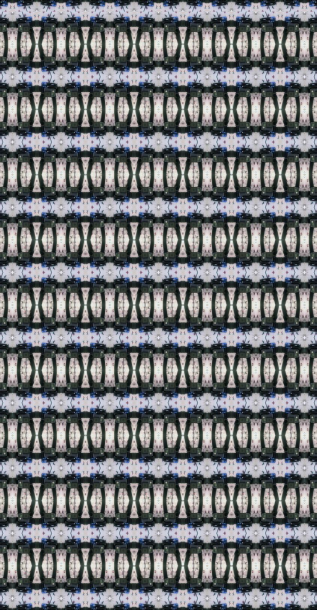
Sophie Cero. Safeguarding wallpaper (Christmas edition) 2024

Sophie Cero. Object Event (crockery) 2021 – diagrammatic timeline drawing
Sadly it is not possible to read the final paper as it has been embargoed to protect those involved, but Sophie is on Instagram as sophie_cero and you can view more of her work there.

 HOLES IN THE WALL