
I arrived home late last night from the 1st Domestic Abuse Commissioner’s Festival of Practice, exhausted but buzzing!
The Festival brought together those working in statutory agencies at the frontline or in decision-making or commissioning capacities in relation to domestic abuse, those working in the domestic abuse specialist sector, and very importantly, survivors of abuse who have such an important role to play in developing responses in this field. There was consideration of progress since the Domestic Abuse Act came into law, and the launch of the DAC Strategic Plan.
With a focus on listening to what survivors have said is important to them, the themes were innovation, collaboration and good practice, and I was thrilled to have been asked to lead a breakout session on child and adolescent to parent violence and abuse (CAPVA). To do justice to the practice emphasis, I was joined by Jane Griffiths of Capa First Response, and by Neil Blacklock of Respect, in his final event before retirement. Neil has been a leading voice nationally in developing work around CAPVA, and it has been a real privilege to have known him and to have trodden some of the journey with him.
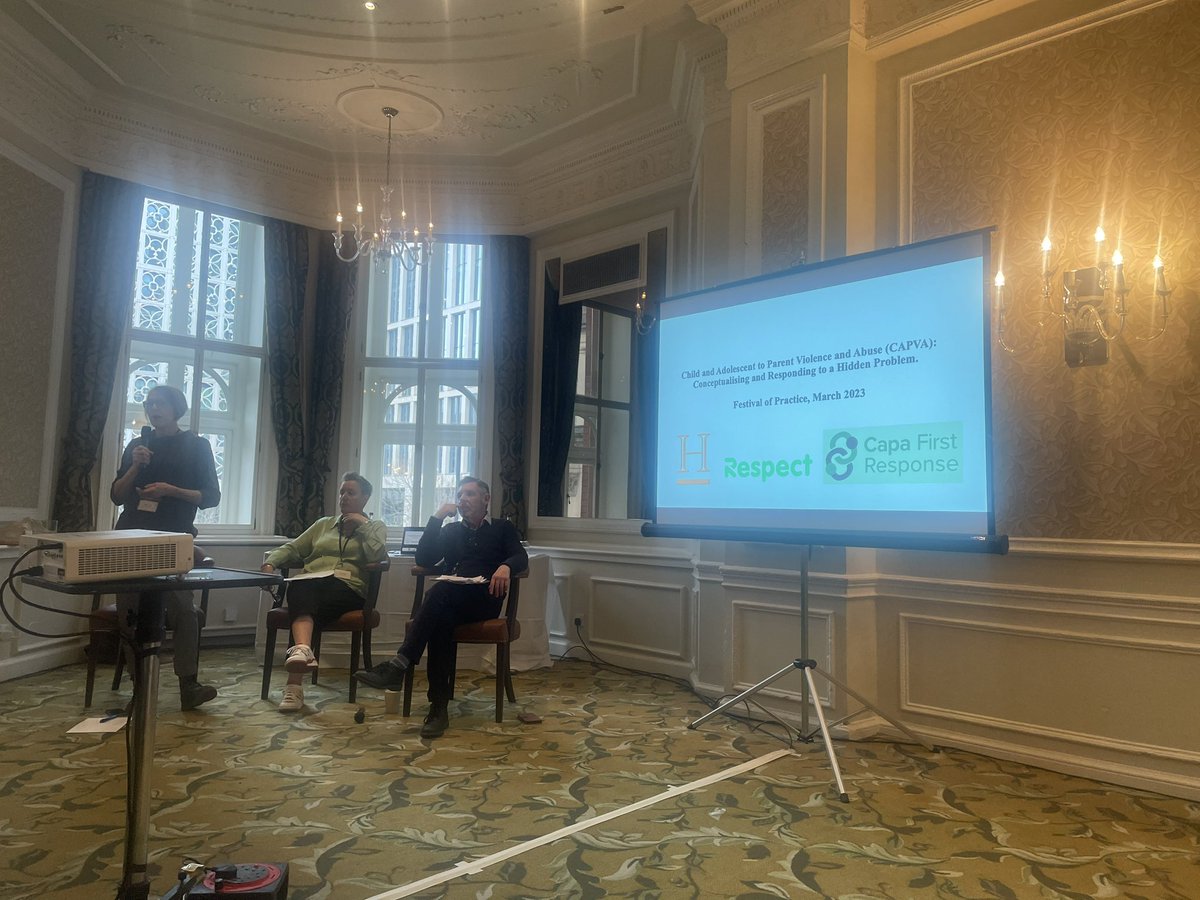
In a whistle-stop tour of the topic, we looked at What do we mean by CAPVA? What are the responses? and Why is this work important? With an audience numbering 100+ there was no way we could answer all the questions people had, but we hope we were able to open up the topic and to provide routes to find out more information for those looking to develop their understanding and response. It was exciting to be with a group of people who were so engaged and keen to know more.
There has always been, and continues to be – and indeed we touched on it at the festival – a discussion about where CAPVA “sits”, and whether a domestic abuse framework is the right way to conceptualise this issue which impacts families with very young children as well as those who fall within the legislation; and those for whom their harmful behaviours can be seen to be an outworking of anxiety or fear, rather than an intent to harm. For me, this highlights the fact that there are many different drivers, and many varied experiences, but each of us, wherever we work, need to have an understanding of the impact of the behaviour in order to respond appropriately – whether that is “within house” or by referral to a more suitable agency. Some behaviour may well have come about through exposure to domestic abuse in the home, and so it is important for this possibility to be incorporated into programmes to support women and their families; while still recognising that the responses developed for adult perpetrators are not appropriate for younger people, and that many families will find it difficult to use the term “abuse” to describe their child’s behaviour. And it is important too to acknowledge that much of the work supporting families currently takes place within the framework of domestic abuse organisations, with the Respect Young People’s Programme a prime example of this work.
I’m planning to spend today scrolling through all the social media to catch up on highlights that I missed – and looking forward to hearing more from the many people with whom we made connections, sharing good practice -and collaborating further!

 HOLES IN THE WALL